Month: December 2012

  • On the sixth day of Christmas: Joe Dante’s “Gremlins”, the greatest Christmas story ever told

    On the sixth day of Christmas: Joe Dante’s “Gremlins”, the greatest Christmas story ever told

    GremlinsIt is natural to associate certain holidays with a specific set of zesty colours and particular attitudes. Here in the United States, our pop culture offers many quick and easy examples of this. Consider the plastic spiders and that strange, psuedo-faux-white-hair-cobweb stuff we slather our homes with to spook potential trick-or-treaters. All this before we purchase stationery to make cut-out hand-traced turkeys which we decorate with such festive fervour that is seems surprising when we then in turn devour and digest that which we made so cute. All of which ultimately leads to encrusting the outside of our very homes with so many vibrant electrical hazards that it is surprising we don’t wear sunglasses just as often during winter.

    But then again, who cares about decorations. We’re here to talk about movies!

    Blending movies and holidays requires a certain finesse. For example, everyone has their perfect list for Halloween horror nights and there is utterly no excuse not to watch Mystery Science Theater 3000 on Thanksgiving, but something special occurs when we arrive at the Christmas film. The same conventions are always there across each and every film – presents, festive colours, family and good will to all men (excuse the traditional but now slightly outdated parlance), and a ribbon-wrapped cookie-cutter ending. These are the things that make the ‘Christmas film’ so recognisable, so unbearably cheesy that any other time of the year they are avoided like a plague rat. But during this special month, we put aside our differences and yield to an exasperated sigh of “well, its Christmas, you just have to watch it”. And when looking at the Christmas movies… well… everyone knows that Gremlins (1984) is the best Christmas Story Ever Told….

    Looking back at Gremlins (1984)

    Gremlins
    Gizmo

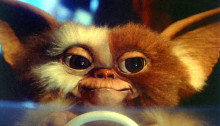
    Randall Peltzer is an American; he’s a down-on-his-luck inventor, a man working with the ink still fresh on his fingers, trying to pull himself and his family up by their bootstraps. And like any true American, he is out trying to showcase his worth in Chinatown, when he comes across an old store so steeped in oriental cliche one might expect that they are watching a film adaptation of ‘The Monkey’s Paw’. Though his invention is lacklustre and finds no buyers, he does find something that is truly special: a strange animal, known as a mogwai, that will make the perfect gift for his son, Billy. The mogwai’s name? Gizmo.

    Young Billy is himself striving to help support the family by working a job at a mediocre bank. It is here that he meets the token antithesis to Christmas cheer – Ruby Deagle, a convenient red herring to distract from the oncoming onslaught of granular green gimmicks. Ruby is everything we are expected to hate during the Christmas period, and a reminder of what most of us are like outside of the festive season. But all Billy wants is to prove his love for Kate during that time of year that is almost as romantic (or at least as commercial) as Valentine’s Day itself.

    GremlinsBut let’s return to Gizmo! Now let’s be frank, this creature is the perfect Christmas gift. He is as cute and adorable as the red-bowed puppy under the brightly lit tree, he learns fast, sings, can imitate words, and he even learns to communicate in no time. Yet with Gizmo come the three mysterious rules, the breaking of which will result in severe consequences. He is as much of a best friend as he is a constant reminder of the necessity for responsibility, especially during a time that flaunts good will towards man, but often leaves us sticking up our nose like Mrs. Deagle towards Billy’s poor old doggy. Ironically enough, it would seem that Mr. Peltzer did in fact buy a kind of monkey’s paw, and his three cursed wishes are about to come true. Things are going to get messy.

    While the film stays faithful to the whimsical writing of Chris Columbus and the often obscene humour of Joe Dante, Gremlins still has enough ‘yech’ in it to shock and awe. Once we begin to understand the true nature of “The Rules” and the ramifications of their violation, we get to see those stellar cocoon special effects straight out of Alien (1979) or Invasion of the Body Snatchers (1978). There are many other snide winks to earlier films – it’s worth watching out for nods to Texas Chainsaw Massacre (1974), The Time Machine (1960), and the use of one of the Back to the Future (1985) sets.

    GremlinsSoon enough, Mama Lynn Peltzer saves Christmas with the barbarity of Conan, bringing the heat via microwave-explosion, and slicin’ n’ dicin’ her way through the li’l green ghouls with hardly a moment’s hesitation. And yet despite these moments of green globs, gross goo and Spike’s general knack for rabble-rousing and trashing a bar worse than the most cliched of biker gangs, Gremlins is still a film for the whole family. Severe cuts, rewrites and (probably necessary) survival of the dog and non-beheading of the mother were intentionally made to ensure a family-friendly holiday hoopla (even so, in the US it is still a founding father of the PG-13 rating, for better or worse).

    Gremlins is a film that should and will continue to taunt and torment youngsters for years, planting little seeds of terror that, when nurtured and watered, will metamorphosize into grotesque egg-like abominations, before hatching into the nostalgia that continues to allow the legacy to continue. Gremlins is everything we have come to expect (whether admittedly or not) from the Christmas season; both favourably and less so.

    And it even has Corey Feldman! Seriously, what more do you want from a film?

  • Cinema IS Christmas!

    Cinema IS Christmas!

    As a person unaffiliated with any kind of religion or spiritualism, at Christmas time I am left contemplating the question that millions of other human beings in today’s secular society must be pondering at the same time –what am I celebrating? Why is this day still meaningful to me?

    The easiest answers reside in notions of togetherness, family, and “good will to all men”. In other words, we are taking a brief moment to recognise the importance of our families, friends and a connection to our fellow humans. Others might say that Christmas has been taken over by the parallel mythology of Santa Claus, the old man whose paternal embrace is closer to young children’s hearts than the religious ideals to which he has been poorly aligned. Meanwhile, cynics will argue that the day (and Santa himself) is now simply a conduit for the encouragement of hysterical consumer behaviours. All these points are (in their own way) true.

    And of course, many would be appalled at the reduction of this sacred holiday to anything other than its origins, the celebration of the birth of Jesus, the locus of Christianity’s beginnings (although it has been postulated that both the date and the use of a tree might be remnants from either pagan rites or earlier Christian “tree of life” ceremonies).

    However, I wish to boldly claim that the reason Christmas still beats in the hearts of those who have long since abandoned (or simply never recognised) its intended meaning, is that the moving image has slowly elevated (perhaps ‘transformed’ is a more appropriate term?) the holiday into something else. But what? A humanist celebration? And why the moving image?

    If I think of Christmas in years gone by, especially during my childhood, one of the defining elements in framing my experiences was the little box of moving images that populates almost every living room in the Western world. Christmas movies, Christmas cartoons, the live presentation of our dear city’s Carols by Candlelight celebrations – these were the markers that confirmed it was Christmas. It wouldn’t be enough to know that my family were celebrating on this day. What defined the experience was that television seemed to literally be celebrating as well – and if TV was celebrating, that meant that EVERY house was celebrating (please excuse the simple mind of a young boy, unaware that the entire world was not a part of this religious rite).

    That little box flooded our home with the iconographic power of Santa Claus, reindeer, elves, baby Jesus, Frosty the snowman, mistletoe, Bing Crosby, Christmas carols and SNOW SNOW SNOW! Indeed, here in Melbourne, Australia where Christmas Day falls in summer and averages a temperature of around 25 degrees Celsius (77F), you will still see countless shop windows all over the city sprayed with a kind of snow-in-a-bottle concoction designed to meet the iconographic expectations that the moving image has placed on Christmas.

    And what are my favourite early memories of Christmas? Die Hard (1988), Rudolph, the Red-Nosed Reindeer (1964), Jack Frost (1979), Bush Christmas (1947), Santa Claus (1985), a hundred washed-out black-and-white American classics, endless TV Christmas specials, some awful telemovie with Olivia Newton-John, and every single adaptation of A Christmas Carol I ever saw. Yeah, I can remember family dinners, Christmas trees and big piles of presents, but I’m not entirely sure these haven’t been filtered and enhanced by the iconography that film and television have implanted in my mind.

    And I know what you’re thinking – this guy sees cinema in everything, he’s totally biased. Well you’re probably right. But today, right here and now, I’m happy to declare – Cinema IS Christmas!

    Merry Christmas!

  • On the fifth day of Christmas: Five Creepy Christmas Movies

    On the fifth day of Christmas: Five Creepy Christmas Movies

    The Nightmare Before ChristmasHere in the United States, the final three months of the year are always filled with holiday cheer, and each festive event comes with its own set of movie-viewing opportunities. The season begins with Halloween, a holiday that affords everybody the opportunity to re-watch their favourite horror classics. Then we meander our way over to stuffing our gullets with Thanksgiving screenings of Mystery Science Theatre 3000 on repeat. And of course, before we come to watching our personal favourites with friends on New Year’s Eve, Christmas delivers its own selection of desirable films.

    But rather than indulge in the traditionally effervescent nature of the Christmas spirit, let’s be honest with ourselves – in many ways, Christmas is a much more unsettling and frightful holiday than Halloween. Here are five films that prove my point.


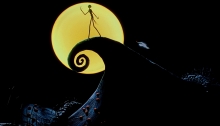
    The Nightmare Before Christmas (1993)

    Henry Selick’s stop-motion masterpiece is still a timeless work of gleeful ghouls and malicious merriment. Tim Burton is often mistakenly understood to be the film’s auteur, but it is Selick who directed the film, and it is his careful and considerate technical achievements that truly set it apart. The Nightmare Before Christmas is as aptly titled for its holiday appeal as Halloween (1980), and still manages to generate a grin of nostalgia out of even the most cynical of Burtonites.

    The Box (2009)

    The Box is certainly the most questionable of the five films I have picked, but in my fervent attempts not to recommend the standard hack-slash dime-a-dozen plastic-wrapped manufactured twelve-dollar action-figure horror films in which people kill people with icicles, I am forced to take some liberties in my interpretation of “Christmas themed” (I will see this list burn before I put Santa’s Slay (2005) or Jack Frost (1997) on it). The Box, guided by Richard Kelly’s knack for obscurity and surreal misdirection, tells the tale of the consequences that come with giving a simple gift. So you know… giving gifts… Christmas…

    The Mothman Prophecies (2002)

    Admittedly, calling this one “Christmas-themed” might also be a stretch. While The Mothman Prophecies is often shaky in its pacing, excessively melodramatic, and liberal in its interpretation of the source material, Richard Gere gives a surprisingly convincing performance in this investigatory thriller about the nature of secrets and things beyond our control. Will Patton is great as a genuinely disconcerting and sympathetic local. And the Christmas connection is… well, I’d hate to spoil the end.

    Frozen (2010)

    Not a single brightly coloured Christmas tree can be seen in this chiller, but Adam Green’s non-Hatchet horror flick gives every reason to be fearful of the holiday season. A simple narrative, executed well (despite a few moments of excess) leaves three skiers stuck on a ski lift for days. An engrossingly claustrophobic film with strong pepperings of dark satire that will be easy to relate to for those already fearful of spending a week confined with the ones “they hold dearest”.

    Gremlins (1984)

    The undisputed reigning king of Christmas horror classics, Gremlins is a dreadfully delectable amalgamation of everything one comes to expect from a true, heart-felt Christmas yarn: a thoughtful present that teaches us moral obligation outside of material desire; the twinkle in the eye that passes between lovers under the mistletoe; even the clumsy familial relationships we come to expect from A Christmas Story, Home Alone and their ilk – all wrapped with a neat li’l grotesquely green bow. Gizmo is the ultimate holiday gift – he is as adorable and sincere as a Christmas puppy. And like the Christmas puppy, once the cuteness wears off we begin to understand that Gizmo comes with responsibilities. Because if you don’t follow the rules…

  • On the fourth day of Christmas: How Rankin and Bass invented television Christmas

    On the fourth day of Christmas: How Rankin and Bass invented television Christmas

    The Year Without a Santa ClausAn interesting little book came out about five years ago called The Man Who Invented Christmas, about how Charles Dickens’ A Christmas Carol played a crucial role in formulating our modern conception of the holiday. So does that make the animation team of Arthur Rankin, Jr. and Jules Bass “The Duo Who Invented Television Christmas”? You could easily make the case. Their first seasonal special, Rudolph the Red-Nosed Reindeer, hit the airwaves in 1964 (two years after the seminal Mr. Magoo’s Christmas Carol and a year before the sublime A Charlie Brown Christmas) and quickly became a perennial favorite. By the end of the decade, the Rankin-Bass team had also produced the classics Little Drummer Boy (1968), Frosty the Snowman (1969) and Santa Claus is Comin’ to Town (1970). They would continue cranking out specials, TV series and theatrical films until Rankin-Bass Productions ceased operations in 1987 (the pair have occasionally collaborated since then).

    Although they sometimes worked in traditional cel animation (as in Frosty), Rankin and Bass will be forever associated with their innovative use of a figurine-based stop-motion process they called “Animagic.” Their trademark production touches are many and memorable. The friendly narrator/singer who addressed the viewer directly and who in real life was usually a big name like Fred Astaire, Jimmy Durante or Burl Ives. The lively, clever musical numbers served up even during treacherous situations. The strong underdog ethos (the defiant anthem “We’re a Couple of Misfits” was a highlight of Rudolph) that usually yielded a message stressing tolerance and courage. All rendered with the handmade visual effects and odd perambulations of doll-like characters that gave these works their slightly trippy appeal.

    Although the above-mentioned Rankin-Bass productions could constitute their “Big Four”, the team dropped some fifteen Yuletide-related TV specials in a two-decade span. Here are five others worthy of discovery or re-acquaintance:


    Nestor the Long-Eared Christmas Donkey  (1977)

    This one has a title that is hard to resist but first a heads-up for moms and dads of very young children: Rankin and Bass had this tendency to depict subjugated populations in situations that could result in the death of parents. So screen things like Little Drummer Boy to decide if the tots can handle the trauma that precedes the heart-warming conclusion.  The journey of the embittered LDB is echoed in the biblical wanderings of the naïve Nestor, also suddenly orphaned. This extremely floppy-eared young donkey struggles with ostracization until a good deed earns him a front-row spot at the Nativity. Like with his glow-nose forebear Rudolph, this one is a victory for the differently-abled.  With narration and songs by Roger “King of the Road” Miller.


    The Year Without a Santa Claus  (1974)

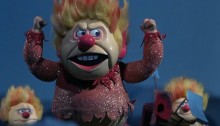
    A sequel of sorts to the classic Santa Claus is Comin’ to Town, this second-tier gem finds our hero feeling overworked and under-appreciated, his existential crisis compounded by a nasty head cold. With Christmas called off, Mrs. Claus hatches a scheme to change her huband’s mind (Mickey Rooney and Shirley Booth voice the couple). A pair of Vixen-riding elves are sent to snowless Southtown to investigate the big guy’s drop in the believability polls and complications follow on schedule. Santa arrives in street clothes (a fuchsia topcoat and matching derby) to smooth things over and many songs are sung. These St. Nick-centric specials are light on their feet, a brutality-free all ages zone where verbalizing and vocalizing win the day. Even the centerpiece villains, the Snow Miser and his cult-figure brother Heat Miser, are more irascible than threatening. The visual and musical highpoint is their wacky vaudeville sing-off, each assisted by a team of minions. In a gratifying twist, Mrs. Claus swings into action for once, rocking an airborne sleigh of her own and cleverly playing the Misers off one another, precipitating (as it were) the necessary weather event to restore the holiday.


    The Cricket on the Hearth (1967)

    More visitations from the Ghosts of Celebrity Past as Danny Thomas introduces this traditionally animated version of one of Charles Dickens’ five holiday novellas. This is a rare such Dickens adaptation that is not the ubiquitous Christmas Carol and for that it merits attention, but otherwise Cricket is a mistletoe misfire. There’s too much sugar and not enough spice and the production values rarely rise above the level of an average Saturday morning cartoon. Thomas plays Caleb the poor toymaker and the blind daughter is voiced by his real-life offspring, Marlo “That Girl” Thomas. Roddy MacDowall portrays the good-luck cricket. Worth a look if found bundled on a DVD with other R-B Christmas fare.


    Jack Frost (1979)

    This special came out some fifteen years after their television debut, and advances in animation technology are readily apparent when watching Jack Frost. It’s sumptuous look, especially in the scenes set in the silver-blue domain of the Kingdom of the Winter Clouds, earns its recommendation but it also works as a star-crossed romance. The titular sprite is the kingdom’s earthly liaison, felt but not seen as he nips at noses and facilitates winter fun. But Jack wants something more and after being granted human qualities on a trial basis he falls hard for Elisa, January Junction’s most eligible bachelorette. Jack’s courtship chances are complicated when he needs his old powers to take on Kubla Kraus, the Cossack tyrant who dominates the town with his steampunk iron horse and mechanical army. Master voice actor Paul Frees, reprising the voice he used for Rocky & Bullwinkle nemesis Boris Badenov, plays Kraus.


    The Life and Adventures of Santa Claus (1985)

    This adaptation of the 1902 book by Wizard of Oz author, L. Frank Baum, is the last holiday special that Rankin and Bass produced, and their last work in the beloved Animagic form. It opens with a beautiful set piece, a procession of supernaturals called The Immortals. Convened by the Great Ak (the authoritative voice of Alfred Drake), they are asked to grant Claus the “Mantle of Immortality”. Baum’s imaginative origin story has Santa as an abandoned human baby found by denizens of Ak’s magical Berzee Forest. In montage scenes he advances from a sheltered boyhood to become a young man indignant at the harsh world of adult mortals who “inhabit the open spaces of the earth”— and who grows determined to do something about it. This production, by the duo’s usual Japanese animation team led by Nasaki Iizuka, is full of wind demons, wood nymphs and horned, nose-ringed monsters and is one of Rankin and Bass’ finer achievements, though one with a spotty history on home video. Well worth seeking out.

    For those constitutionally unable to appreciate Christmas programming or for those who want to further explore the world of Rankin/Bass, may I suggest the brilliantly eccentric 1967 feature, Mad Monster Party, in which the duo work their Animagic with the creative input of Mad magazine founders Harvey Kurtzman and Jack Davis. While everyone will want to move on after the 25th, there’s never a bad time to enjoy the Halloween aesthetic.


    About the Author

    Rick Ouellette is the author of Documentary 101: A Viewer’s Guide to Non-Fiction Film. A review of his personal favorite among the millions of Christmas films, the 1984 version of A Christmas Carol starring George C. Scott, is now on his blogsite: http://rickouellettereelandrock.wordpress.com/


  • On the third day of Christmas: Five festive films to watch on Christmas Day

    On the third day of Christmas: Five festive films to watch on Christmas Day

    Die Hard ChristmasFor me, Christmas Day is an excuse to spend time with the extended family and have the freedom to indulge in never-ending supplies of food and alcohol. I’m sure that this is the case for many people, regardless of religious orientation. But for many there comes a point on this festive and gluttonous occasion when, despite the fact that your body starts to get weighed down by all the cheese, chocolate and wine you’ve consumed, you’re not quite ready to call it a day. It’s times like these that call for a Christmas Day movie!

    A movie? But, isn’t that a bit anti-social? It doesn’t have to be. The key is to find a film that’s not intellectually demanding enough to talk over; that everyone’s happy enough to watch; and that’s upbeat enough to keep the mood cheery.

    These five films aren’t necessarily the “best” Christmas films, but they’re damn fine entertainment for a group or party environment on Christmas Day.

    Die Hard (1988)

    Everyone’s favourite action movie is an absolute blast no matter what time of year you watch it, but it’s especially entertaining during the Christmas season. Die Hard may not be the cheeriest film but any fan of action cinema will be happy while it’s playing. Maybe wait till the little ones have gone to sleep though!

    Elf (2003)

    Who would’ve thought that Will Ferrell’s comedy could work in a kids’ film? Elf is a hysterical G rated Christmas delight and, believe it or not, it’s actually one of Will Ferrell’s better films. Ferrell is right at home as a human, raised as an elf since birth. Hilarity ensues when he leaves the North Pole to find his real father, played by James Caan, in New York City. It truly is a miracle that this unique Christmas story happens to be a solid and thoroughly entertaining film. Thanks, Jon Favreau, for directing a great Christmas Comedy for the whole family to enjoy.

    Love Actually (2003)

    Anyone who’s anyone loves Love Actually, whether they’re partial to romantic comedies or not. It’s the ultimate rom-com, meshing together several different Christmas love stories and leaving no room for the boring bits. You will laugh, then you will cry, then you will laugh and cry again. The film is so frothy that you can jump into it at any point and still be moved, making it the perfect choice for your Christmas gathering.

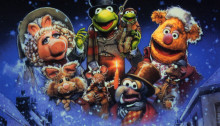
    The Muppet Christmas Carol (1992)

    Charles Dickens’ A Christmas Carol is one of the most familiar and retold Christmas stories in Western culture, and rightly so. Unfortunately, the marketing world preys on already existing gold and repackages it over and over again for every demographic until it ends up entirely devalued. Thankfully, The Muppet Christmas Carol presents the familiar Dickens tale with so much integrity that you’ll feel like you’re being introduced to the story for the first time. Michael Caine delivers an appropriately frightening, yet ultimately touching performance as the infamous Ebenezer Scrooge, and the Muppets add enough colour to engage the children and keep the story fresh for the adults.

    Home Alone (1990)

    John Hughes delivered the perfect family Christmas comedy, or the perfect family film full stop, in Home Alone. Imagine Ferris Bueller’s Day Off set at Christmas time with an 8-year-old Ferris…you’re left with this childhood comedy extravaganza! Nothing beats a good children’s caper but it’s rare to find a family comedy with tolerable child stars. Luckily the combination of Hughes’ ability to draw charismatic performances from young stars and Macaulay Culkin’s natural charm create the desired spark. Stuffed with Christmas cheer, cartoon violence, classic gags and effective coming of age lessons, Home Alone is even more enjoyable with company.