Month: August 2012

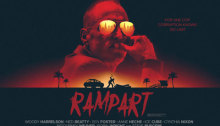
  • Rampart: Woody Harrelson kills baddies… and goodies

    Rampart: Woody Harrelson kills baddies… and goodies

    Another quick review from the Melbourne International Film Festival

    Woody Harrelson proves once again that he is one of the most incredibly underappreciated actors of his generation in Rampart, the latest film from the talented Oren Moverman. Rampart follows the story a corrupt Los Angeles police officer who never misses an opportunity to indulge in copious amounts of drugs and alcohol, sleep with random strangers, beat suspects and murder when necessary. In fact, Overman’s film could easily have carried the title Bad Lieutenant: Los Angeles, given the similar subject matter that Overman examines in its own unique way.

    Dave Brown (Woody Harrelson) is a corrupt LA patrol cop and former Vietnam veteran (the film is set in 1999) caught on video beating a man half to death for accidentally (probably) crashing into his patrol car. The public furore around the incident coincides with a very public investigation of local police corruption, making Brown the figurehead for everything wrong with the police force. Meanwhile, Dave is attempting to keep his unorthodox family together (he lives in two neighbouring houses with two ex-wives who are sisters and his two daughters), despite their absolute contempt for him and a lifetime of his disgraceful behaviour. Dave becomes progressively more paranoid and dangerous as he attempts to negotiate his way out of trouble.

    Overman does a wonderful job of presenting Dave in a manner that elicits both sympathy and disgust from the viewer as it become clear that he is both a truly horrible human being and a brilliantly intelligent man totally incapable of controlling his impulses. His fingerprints on this one are clear – his style wavers between a kind of detached observational mode and an intensely emotive one.

    Harrelson brings a wonderful depth and humanity to a character attempting to climb his way out a situation that he knows is ultimately inescapable. As with his performance in The People versus Larry Flynt, he is so convincing that one can’t help but assume that the actor must identify strongly with the part he is playing.

    The script exhibits all the complexity and grit one would expect from James Ellroy, the writer of LA Confidential. This one is definitely worth a look.

  • Arnold Schwarzenegger’s ‘The Last Stand’ trailer

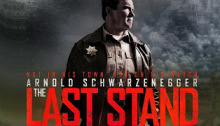
    Arnold Schwarzenegger’s ‘The Last Stand’ trailer

    Is anybody else so excited they could cry? The Governator is finally back where he belongs!

  • Dark Horse

    Dark Horse

    Another quick review from the Melbourne International Film Festival!

    Dark Horse is the latest tale of irrevocably stunted human beings attempting to navigate their way through the real world from veteran director Todd Solondz. As a general rule, I find Solondz’ work very difficult to bear, not because it is bad, but because his portrayal of human beings in a state of completely arrested development is incredibly traumatic. This time around Solondz has taken pity (kind of) with a film that allows the viewer, if not the characters, a slight glimmer of hope.

    Dark Horse follows Abe (Jordan Gelber), a stunted and morbidly obese thirty-something who lives with his parents (Christopher Walken & Mia Farrow) and spends his time collecting rare action figures. Abe works for his father’s real estate agency in a position that he is far too lazy and incompetent to fill, depending entirely on the pity of the company receptionist and the weakness of his father to bluff through. Poor Abe is entirely incapable of taking responsibility for any aspect of his life; blaming everybody else for the pathetic course it has taken. It is at this point that he meets the beautiful yet emotionally devastated Miranda (Selma Blair), a paralysing depressed and heavily medicated woman with dreams of being a writer. These two completely different human beings, whose only connection lies in their inability to deal with the world, attempt to find in each other the happiness that they have not been able to find anywhere else.  Oh…  by the way… it’s kind of a comedy.

    Solondz’ directing is perfect, and every performer in this film gives an incredible performance, most especially Gelber, in a role that balances the fine line between generating empathy and disgust in the viewer. My only complaint lies in a third-act shift that feels both unwelcome and unnecessary – which I won’t elaborate on here.

    Definitely worth a look.

  • Faust: My soul hurts

    Faust: My soul hurts

    Another movie at the Melbourne International Film Festival!

    So here is my review of Faust. I’ll keep it brief because, as this film ironically demonstrates, life is short and should not be wasted.

    This adaptation of Goethe’s Faust takes one of the seminal works of German literature (and literature in general) and subverts it – by which I mean it takes a fascinating story about man and the essence of mor(t)ality, and de-fascinatingerises it into a blubbery two-and-a-half hour snail ride that appears to have been directed by a comatose Fellini impersonator.

    Faust depends heavily on its European style (and length) to provide the illusion of substance. This is particularly tragic, because every single moment of the film looks stunning – hats off to cinematographer, Bruno Delbonnel.

    Performances vary from good to average, but the material is so inane, contrived and pretentious that you’ll find yourself pretending the cast are awful just so you can give your enemy a face.

    Faust was directed by Aleksandr Sokurov, who had already made me slightly grumpy in the past with his gorgeous lump of video-art, Russian Ark.

    Highlight: Gangrenous body parts in the first five minutes successfully mortified me.

    I recommend checking out the F. W. Murnau version, from 1926. A masterpiece:

  • Robot & Frank

    Robot & Frank

    Film three at the Melbourne International Film Festival!

    Robot & Frank is the kind of film I walk into with the expectation that I’ll end up suffering a severe migraine from 90 minutes of compulsive eye-rolling. On paper, its premise seems to almost quiver with Ron Howard-esque sentimentality and cuteness. But somehow, by some miracle, this possibility has been entirely subverted – much to the credit of first-time director, Jake Schreier.  So here goes:

    An old man (Frank Langella), sometime in the future, suffers from Alzheimer’s. Given the old man’s stubborn refusal to seek help and move into a care facility, the man’s son (James Marsden) buys a robot (voiced by Peter Sarsgaard) to look after him. The old man forms a relationship with the robot, and together they recommence the old man’s former career as a cat burglar. Meanwhile, the old man continues to flirt with the local librarian (Susan Sarandon), and deal with the anti-robot agenda of his visiting daughter (Liv Tyler).

    The miracle of this film is the way that it avoids any of the clichés that almost inevitably arise in this sort of thing. The central character, whose past is littered with mistakes that have cost him, and more importantly his family, dearly, seems fundamentally disinterested in atoning for his past sins – indeed he seems willing to exploit the emotional damage that these sins have caused when necessary. Despite all this, the film has been crafted meticulously enough that such indiscretions do not discourage the viewer. Indeed, they simply add to the texture and lovability of the former cat-burglar, who has assigned himself the task of raiding the house of a patronising “yuppie” (Jeremy Strong) who’s recently moved into the neighbourhood.

    The other major cliché that often arises in these films (AI, Bicentennial Man, I, Robot) is the notion of the robot that develops a consciousness and becomes ‘alive’. I won’t go into details, suffice to say that this film carefully avoids such notions, emphatically separating itself from movies focussed on this notion of artificial life (not that there is anything essentially wrong with those films). This point is made hilariously in a scene in which two robots are made to interact under instructions that each should pretend the other is human. It should also be mentioned that the robots in this film are ironically modelled on an archaic notion of what a robot should look like. They would be quite at home on the set of the original Star Trek.

    Aside from a misstep towards the end of the third act, the film deals intelligently with the realities of Alzheimer’s and its inevitable consequences, never electing to offer sentimentality as a relief or refusal to acknowledge these consequences. Langella is typically marvellous in the role of the fading cat-burglar; Sarsgaard does great work in keeping his robot both lovable and cold; while Sarandon, Marsden and Tyler all deliver solid performances. Jeremy Strong also does an exceptional job of being hateable in the role of the obnoxious yuppie who’s into retro things… like libraries.

    Hats off should go to the cinematographer, Matthew J. Lloyd, whose work echoes Emmanuel Lubezki’s on The Tree of Life.