I get a lot of requests to review short films and in the past I’ve rarely been able to get to many of them. However, having spent the last five months as a short film selection panellist for the Melbourne International Film Festival (I finished up a couple of weeks ago), I feel a renewed sense of obligation towards the artists working in this space. So I’m going to start showcasing some of the shorts sent to me here on CurnBlog. If you’d like me to take a look at a short film, let me know by posting a comment on the Curnblog Facebook page.
Bridges
Elizabeth (Joslyn Jensen), a babysitter who spends much of her time caring for an infant boy, finds herself trapped in the child’s family apartment by an unwanted visitor. Elizabeth manages to leave the apartment and wanders the streets to kill time. Alone with the child, Elizabeth reflects on their connection.
Christopher Bell does a wonderful job of directing this short film with a simple air of contemplation that allows the viewer necessary time and space to ask the questions that reside between the lines. Without a single moment of unnecessary exposition, Bell shows us the powerful bond between the woman and child; the lonely isolation that seems to come with her duty of care; and the way in which this loneliness only further serves to fuel her emotional investment in the young boy.
Afterglow
For those who are interested in film’s more experimental modalities, check out Alex Bowlin’s Afterglow. A beautiful fusion of abstract and every day imagery combines with a stirring score and ponderous narration to form a quite mesmerising experience. An ocular massage that will conclude with you feeling far more at peace than when you began.
Step 9
“Ray and Addison were once married, but have gone their separate ways. Ray asks for one last chance to set the record straight so he can move on with a clear conscience. Addison reluctantly agrees, but gets more than she bargains for in this short emotional drama.”
Scott W. Fitzgerald keeps the twists and turns coming in this tale of emotional betrayal, shattered dreams and redemption. Deceptively simple in its execution, Fitzgerald manages to keep the truth just out of reach until the final moments. You’ll need permission to view this one, so contact Scott W. Fitzgerald if you’re interested.
If you’re on Facebook I’d love it if you could drop by and Like the new page – and maybe make a comment or two as well. It would be great to see this become a forum for fun conversation about films.
I was recently asked to put together a post on films that deal with the experience of migration by a friend who is about to take the big plunge. Of course, this is a huge topic. People migrate for all sorts of reasons, and so the experience is hardly a unified one. The act of leaving behind what one knows for an entirely new frontier can be an act of hope that brings about fresh beginnings, a means of escaping from tyranny or oppression, or of course there is the ultimate final migration and whatever that might entail (depending on what you believe).
So without further ado, here are ten films that encapsulate some of the many incarnations that the migration experience can take.
1. The Immigrant (1917)
Where better to start than with Charlie Chaplin’s classic short on the difficult and yet hopeful experience of migrating to the United States? Chaplin is at his finest when he achieves a perfect balance of social commentary and comedic ingenuity and this film is certainly a demonstration of that. From the boat ride over, to the struggle to maintain dignity in a foreign (and not always welcoming) land, Chaplin’s film is a great window into the rewards and complexities of starting again without a cent to your name.
2. The Adventures of Barry McKenzie (1972)
Not so much a story of migration as that of a pilgrimage, this is the irreverent tale of an Aussie bloke (Barry Crocker) who finds himself unwillingly going on a trip to England with his aunt Edna (Barry Humphries). The film is loaded with a savage critique of both Australian and English culture at the time, and people offended by the coarser side of humour should probably give it a miss. The closest American equivalent would probably be South Park.
(And yes, Aunt Edna’s character carries on beyond the McKenzie films and eventually becomes Dame Edna.)
3. The Three Burials of Melquiades Estrada (2005)
When a Texan man’s best friend, an illegal immigrant, is murdered, he takes the culprit hostage and forces him to carry the body across the border into Mexico for a proper burial. A powerful film that shines a light on the indignity and disempowerment that comes with living in a place where your rights aren’t fully recognised.
4. Total Recall (1990)
Well before Phillip K. Dick’s short story, We Can Remember It for You Wholesale, was butchered in the 2012 version of the film, Verhoeven’s action masterpiece cemented itself as one of the seminal examples of the Hollywood action/sci-fi genre. Using Schwarzenegger to good effect, this is the story of a man’s inexplicable desire to migrate to the planet Mars and start afresh. Verhoeven artfully constructs a film that reflects Dick’s own discombobulating sensibilities: What is real? What is a dream? Is this actually happening? Does it matter? Big questions for a film comprised largely of machine gun fire, and yet they are asked more skilfully than in many films that choose to tackle the topic directly.
5. Bandit Queen (1994)
This is the true story (although its accuracy is hotly debated) of Phoolan Devi, an Indian woman born into social circumstances that she could not tolerate. At a young age, the unusually aggressive Devi finds herself married off to a man that she despises. When she goes too far in her open contempt of her situation, Devi is completely ostracised and must build a new life. She goes on to lead a group of bandits and eventually becomes something of folk-hero, and finally, after much struggle, a significant political figure. The savagery with which Devi contended (and eventually dealt out) is more than I could possibly articulate here, but this film about escaping oppression is worth a look. (Devi was assassinated in 2001)
6. The Godfather: Part Two (1974)
It would be crazy to have a list of films on the topic of migration without including this one. Coppola’s epic meditation on the corrupting potential of the American dream continues here, with the story now split between the ongoing expansion of Michael Corleone’s criminal empire and the tale of his father’s migration to the United States some seventy years earlier. A vivid depiction of late 19th and early 20th century America, this is easily one of the greatest American films ever made.
7. The Party (1968)
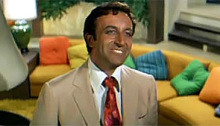
Peter Seller’s The Party is now quite regressive in terms of its depictions of race, but there’s no denying the brilliant comedic force of this one-man masterpiece. Seller’s plays Hrundi V. Bakshi, an Indian man who has moved to America to commence a career in Hollywood. Unfortunately, Bakshi’s bumbling ways have him fired from his job as an extra on a big budget film set. Luckily, a clerical error sees Bakshi invited to an exclusive Hollywood party. It is at this party where the vast majority of the film takes place, with Bakshi’s clumsy antics constantly thwarting his own mission to network with the Hollywood elite. Special stuff.
8. Les Visiteurs (1993)
In this French classic, a knight (Jean Reno) and his squire (Christian Clavier) make the ultimate migration when a senile wizard moves them 1000 years through time to the 20th century. Most of the comedic quality comes from watching the time travellers misinterpret the modern world at every turn. Lots of fun.
9. Night on Earth (1991)
Not so much a film about migration as a migrating film, Jim Jarmusch’s Night on Earth is a collection of five stories about taxi trips happening at the same time in five different parts of the world. A huge cast of actors come together to create this wonderful (if sometimes uneven) meditation on the consistency of the human experience. Worth a look.
10. The Seventh Seal (1957)
This masterwork from Ingmar Bergman is widely recognised as one of the great examinations of life’s ultimate act of migration, death. As the plague sweeps through medieval Sweden, its horrors force a knight (Max von Sydow) to start question the meaning of existence. When the Grim Reaper appears, the knight engages with him in a game of chess to secure his own life. Absolutely cannot be missed.