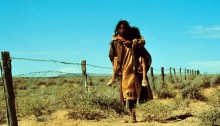
 The twenty-sixth of January has passed for another year, although most of my readers will be unaware of the significance that the day holds for Australians. It is Australia Day, a celebration of our national character (perhaps akin to Thanksgiving in the United States) on the date that the First Fleet arrived in 1788. The day is generally spent at barbeques with friends and usually involves what would normally be considered the consumption of an abhorrent amount of Australian beer. However, with each passing year I find myself less at ease celebrating this holiday and more particularly with the date upon which it is held.
I won’t go too far into details, suffice to say that while I am in no way opposed to the celebration of our national history, there is no denying that this particular date is uncomfortable. Firstly, it is perhaps the least fortunate date in the history of the indigenous/Aboriginal Australians – in some circles it is even referred to as Invasion Day or Survival Day. Secondly, it is the day upon which many of our ancestors arrived in chains (a genetic pool made up of those who didn’t die during the journey), having been taken from their friends and families and dragged halfway across the world.
But in recognition of the first point and with the conciliatory desire to still celebrate the cinematic achievements of this great nation, I’d like to take a look at ten of my favourite films that concern themselves with representing the historical plight of the indigenous people of Australia.
Ten Canoes (2006)
Rolf De Heer’s stunning yet simple look at Aboriginal life prior to the arrival of the west oscillates between the day to day activities of an ancient Arnhem Land tribe and the myths they tell of their ancestors. A wonderful attempt to open a window into another time, De Heer’s film won the Un Certain Regard Special Jury Prize at the 2006 Cannes Film Festival.
Walkabout (1971)
Nicolas Roeg’s Australian set masterpiece sees a young boy and girl taken into the outback by their father, where he attempts to kill them before taking his own life. Stranded, the young children are near death when they come across a young aboriginal boy who helps them survive. Roeg’s wonderful film contrasts the seemingly unnatural complexities of modern life with the raw, honest and ancient ways of a people who have a profound (and perhaps enviable) relationship with the land.
Samson and Delilah (2009)
The first feature from aboriginal director, Warwick Thornton, follows a young indigenous man and woman living in a bleak and remote aboriginal community. The devastating and disenfranchising effects of a remote location, alcohol and drug addiction, and exploitation have left their home a seemingly devastated place. After a series of unfortunate events, they steal a car and head into the city with the intention of… starting fresh? It is unclear, the young man does not speak, and the young woman is lost in grief due to the recent death of her grandmother (her parents were apparently already deceased). This stunningly shot story (comparisons to Mallick abound) provides a small glimmer of hope that all is not lost, while never flinching away from harsh reality.
Samson and Delilah won a ridiculous number of international awards, including the Caméra d’Or (Gold Camera Award) at the 2009 Cannes Film Festival.
The Chant of Jimmie Blacksmith (1978)
An adaptation of the novel by Thomas Keneally (who also wrote Schindler’s Ark which became Schindler’s List), this brutal film directed by Fred Schepisi deals with the troubling true story of a young aboriginal man who is exploited until he can take it no longer. An act of violence allows the white community to validate their negative behaviour towards him, and the film spirals towards what is an inevitable conclusion.
The Sapphires (2012)
The Sapphires, which screened at the 2012 Cannes Film Festival to a ten-minute standing ovation, is the first feature from aboriginal director, Wayne Blaire. The film is based on the true story of four aboriginal sisters (Deborah Mailman, Jessica Mauboy, Miranda Tapsell, Shari Sebbens) who form a soul group in the 1960s to entertain US troops in Vietnam. Managed by Dave (Chris O’Dowd), a charismatic and drunken Irishman, the group escape the restrictions that race places on them in 1960s Australia to become hugely popular with African American troops in Vietnam. While the film does have a few problems, it deals effectively with the disenfranchisement of aboriginal people in Australia in a manner that addresses the problems of the past while also providing a message of hope for the future.
Rabbit-Proof Fence (2002)
A Phillip Noyce film based on the true story of a group of “half-caste” girls (they are half-white, half aboriginal) who run away from a re-education settlement in 1931. Tragically, “half-castes” were once taken away from their families with the intention of educating them as white people, then having them only breed within the white community until all evidence of their aboriginal heritage was diluted through future generations. Nasty stuff, and this film is a window into a moment in history we cannot allow ourselves to forget.
The Tracker (2002)
Another film by Rolf De Heer, this time involving the story of a racist police officer in the 1920s, who uses an aboriginal tracker to hunt down the killer (also aboriginal) of a young white woman. However, once they are on their way the outback provides a vacuum in which all prejudices are released and the situation begins to escalate.
The Proposition (2005)
A western relocated to the Australian Outback in the late nineteenth century, John Hillcoat’s masterpiece is, perhaps heretically, one of my favourite entries in the genre. Following the traditional narrative of lawman versus the outlaw gang, but with an approach that makes the morality of every side seem perverse, this is certainly one of the more brutal westerns you will ever see. While the film does not take the plight of indigenous people as its central narrative, the depiction of aboriginal culture (and the horrifying contempt for it) are depicted with an accuracy that is considered almost unrivalled in Australian cinema.
Where the Green Ants Dream (1984)
Werner Herzog’s first film in English follows a conflict that ensues between an aboriginal community and a mining company when they decide to mine an area of land that the aboriginals believe cannot be touched without destroying the world. The film demonstrates Herzog’s usual flair for beautiful and engaging cinema, and in his usual fashion it is less concerned with historical or cultural accuracy than with highlighting a more general set of concepts. An oddity worth seeing, but take it with a grain of salt.
First Australians (2008)
I am cheating a little by including a documentary television series, but this comprehensive look at the aboriginal experience from the arrival of the First Fleet in 1788 to the Government recognition of the indigenous population’s right to native title in 1993, is easily the most significant filmic work on the subject of post-colonial aboriginal history. Visceral and educational, a stunningly beautiful piece of filmmaking.