Month: November 2012

  • Early Superhero Movies: 1920 to 1948

    Early Superhero Movies: 1920 to 1948

    I’m no expert on superhero films and even less on the comic books that spawned them, but the recent release of The Dark Knight Rises on Blu-ray started me thinking about the historical development of the cinematic superhero. As a result, I’ve come across what appear to be some of the earliest incarnations of cinematic superheroes, ranging from 1920 to 1948. It’s interesting to note that all bar one of these characters still holds cultural currency today.

    The Mark of Zorro (1920)

    Zorro isn’t a superhero you say? A masked crusader with a secret identity who goes around saving people from organised criminals – that’s a superhero (or at least the beginnings of one). This film was a vehicle for Douglas Fairbanks, later to be known for swashbuckling roles like Robin Hood (1922) and The Thief of Baghdad (1924), and he would later go on to star in the sequel, playing the son of the original Zorro.

    Much has been made of the influence of Zorro on Batman, a relationship that has been confirmed by Batman’s creator, Bob Kane. Also worth noting, the Zorro character first appeared in an All-Story Weekly serial just a year prior to the film’s production, but the character was based on nineteenth century bandit, Joaquin Carrillo Murrieta, often referred to as the Mexican Robin Hood.

    The Adventures of Captain Marvel (1941)

    While this particular hero has been largely forgotten by the general public (my understanding is that this is not entirely the case in the comic book universe), he is the very first cinematic incarnation of the contemporary superhero. He has a cape, powers and he can fly.

    Perhaps the most subtle and striking contribution this 1941 serial gave to the world was the word “shazam”. The movie details the adventures of a young boy who, due to a series of superhero-like incidents, gains the power to turn into Captain Marvel by screaming “shazam”. Captain Marvel must take on The Scorpion, a shrouded figure who can probably lay claim to being the first true superhero-nemesis.

    Batman (1943)

    We all know who this fellow is, but most of us probably haven’t seen this particular version. This WWII era Batman serial casts him as a government agent, dedicated to bringing down the evil Prince Daka, the head of a Japanese espionage syndicate situated in Gotham’s Little Tokyo. There are some rather uncomfortable moments of blatant racism, very much a display of the cultural clime.

    Possibly the greatest triumph of the 1943 version was the invention of the bat cave, something that was not originally present in the comic book series. This serial was popular enough to warrant the production of Batman & Robin in 1949 – also worth a look.

    The Phantom (1943)

    1943 also saw the Phantom hit the big screen for the first time in this classic serial. The narrative has The Phantom killed by a Nazi on the hunt for sacred objects with magical powers of some sort, only to be replaced by his son (as is tradition of the Phantom), who seeks out to save the day and get revenge.

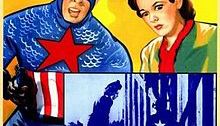
    Captain America (1944)

    In this serial, Captain America is in fact Grant Gardner, District Attorney, whose arch nemesis is none other than the local museum curator, Dr. Cyrus Maldor, aka The Scarab. One of the plot points amusingly has Captain America attempting to prevent the Scarab getting his hands on the “dynamic vibrator.”

    Dick Purcell, who took on the role of Captain America, unfortunately died of a heart attack before the serial was released.

    Superman (1948)

    Finally, this serial marked the first cinematic outing of the superhero community’s most well-known character, Superman. The story of Superman is fairly close to the one we know today, although here Superman goes up against The Spider Lady rather than Lex Luthar who appears in the 1950 sequel, Atom Man vs. Superman – Atom Man being Lex’s alter-ego.
  • Casino Royale(s): The Forgotten Bonds

    Casino Royale(s): The Forgotten Bonds

    Thought Sean Connery was the first James Bond?

    In honour of the recent release of Skyfall, here are a couple of Bond films that you may not know about.

    Casino Royal (1954)

    The first screen adaptation of a James Bond novel goes all the way back to 1954, when CBS decided to create a television adaptation of Casino Royale as  part of the Climax! TV series. Barry Nelson played “Jimmy Bond” not as a British MI6 agent, but as an American working for something called “Combined Intelligence”. Here, for your viewing pleasure, is the film in its entirety.

    Casino Royale (1967)

    The second adaption of Casino Royale starred David Niven as “Sir James Bond 007”, a retired agent who comes out of retirement to run MI6. The film is a parody of the Bond series, and features the comic talents of Peter Sellers. In this adaptation it’s revealed that the name and number of Bond are passed down to another agent when a Bond dies or retires – a theory that, until recently, didn’t really clash with the official series.

    The film rights for this version of Casino Royale were purchased by Charles K. Feldman some years earlier to this adaptation – with the hope that he might be able to have the novel turned into an Eon Productions film (the producers of all ‘official’ Bond movies). When this deal failed to come to fruition, Feldman elected to turn the film into a parody of the series. The result, with scenes directed by no less than six different directors, is a fascinating mess.

  • A look back at the moving image: From Silence to CGI

    A look back at the moving image: From Silence to CGI

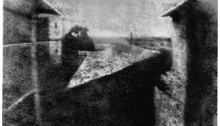
    First ever photograph. View from the Window at Le Gras (1826)

    There is no doubt that this is the era of the moving image. Since the 1860s, with the invention of the zoetrope, an unstoppable wave of innovation has taken this infant technology and built it into the definitive mode of communication for the twenty-first century. Now we are increasingly unlikely to go a single day without exposure to computer screens, televisions, smart-phones, cinema screens and no doubt many other examples that do not immediately spring to mind. In the modern era, when our reality is governed by the moving image, it is sometimes hard to recall just how incredible this change truly is.

    So I’ve taken the liberty of almost arbitrarily selecting some examples of the moving image from history to remind us of the incredible shifts it has afforded.

    Earliest surviving film and sound recordings (1888)

    Here is some footage shot in Leeds, London on 14 October 1888, purported to be the earliest surviving example of film. The clip also includes some footage shot two weeks later, also in Leeds. Over the top of these clips is playing a recorded performance Of Handel’s Israel in Egypt from 29 June, 1888. This is the earliest surviving example of recorded sound. Here then, disregarding the zoetrope, is the very beginning of cinema – a few short and inconsequential moments captured 124 years ago. It would be impossible for the people going about their business in this footage to understand that they were to be the first human beings whose motions would be captured and witnessed beyond their own time – that their morning walk would be watched by others more than a century into the future.

    Prior to this moment, we have no way to directly gaze upon living history, except perhaps through the photograph. Incidentally, I have included the first-ever photograph, taken in 1826, at the top of the page. Prior to this moment, history is solely accessible via its artefacts.

    New York Fire Brigade (1893)

    Five years later, the efficiency of film technology had improved. Here, looking at the New York Fire Brigade, dependent on the horse and cart at the time, are we offered the opportunity to think about two things – how radically civilisation has changed, and how powerful it is to be able to see through time to this by-gone era.

    The Dickson Experimental Sound Film (1894 – 1895)

    Here we may observe the earliest attempt to create synchronised sound/image recording.  The experiment was a test of the Kinetophone, a device developed by Thomas Edison, one of film’s early innovators. It is fascinating to note that this was a goal more than thirty years prior to it being practically achieved.

    A trip to the Moon / Le Voyage dans la lune (1902)

    Here we see the beginnings of narrative and special-effect filmmaking with George Melies’ most famous film. At just ten minutes, the film tells the story a trip to earth’s satellite. One need only view it to marvel at how quickly Melies, a magician, had managed to turn film into a realm of fantastic escapism.

    Nosferatu – A Symphony of Terror (1922)

    There are a hundred films that could be chosen to represent the silent era, but for me this is the one I return to more than any other.  By 1922, narrative filmmaking had become a true art form, and F.W. Murnau demonstrates this stunningly in the first and greatest adaptation of the Dracula story. Notice how by this time, cinema has gone from simple visual documentation to a stylised and dramatic aesthetic. There is no denying the force of the shadowy imagery seen here.

    The Jazz Singer (1927)

    Here is a moment from the first ever sound feature, The Jazz Singer. Apart from the abhorrent use of blackface which will forever mar the film, this marks a landmark moment in filmmaking, as the studios began to shift away from the silent era.

    The Hindenburg Disaster (1937)

    Here we see film’s other significant power, that of documenting history as it occurs. One cannot help but recall the events of September 11 that would occur 64 years later, as we bear witness to this tragic incident that resulted in the deaths of 35 of the 97 people aboard the ship (and one member of the ground crew). Here was a new way of capturing the world’s happenings and communicating them as news.

    2001: A Space Odyssey (1968)

    Jumping forward thirty-one years, we see a radical leap in film technology, with Stanley Kubrick’s masterpiece boasting visuals that had been unimaginable up until this point. Ever since WWII, science fiction had become an incredibly popular genre in the United States – with interest in technological innovation’s threat and potential becoming a cultural fixation, especially with the looming threat of the cold War. In this film Kubrick tackled the very notion of humanity’s capacity for innovation and destruction, possibly more successfully than any film would ever do again.

    Sunshine (2007)

    Another leap of forty years, and we witness the results of a digital revolution that has produced special effects technology beyond anything that could be conceived of just two decades earlier. Here is Danny Boyle’s Sunshine, an underrated Science Fiction classic that employees CGI perfectly, without allowing it to overpower it’s central focus – human beings.

    So… what’s next?

  • Oliver Reed: A moment to remember

    Oliver Reed: A moment to remember

    “Richard Burton was hitting the bottle with Jimmy Hurt the night before his death. He knew it was going to kill him, but he did not stop. I don’t have a drink problem. But if that was the case and doctors told me I would have to stop, I’d like to think I would be brave enough to drink myself into the grave.”

    Let’s take a minute to remember one of cinema’s most outrageous and talented rascals, Oliver Reed. Here are a few of my favourite Oliver Reed moments.

    In the mid-1980s, Paul Heiney receives an acting lesson from Reed for a BBC documentary. As was usually the case with Reed, things escalated:

    Oliver Reed plays a psychiatrist with a unique treatment program in David Cronenberg’s thoroughly underrated, The Brood (1979). Here we see this technique in action:

    David Letterman interviews a thoroughly out of control Reed in a 1987 episode of Late Night:

    And finally, who could forget one of his most recognised performances as the psychotic Bill Sykes in Oliver Twist (1968):

  • I believe in cinema

    I believe in cinema

    I believe in cinema. I believe in the almost infinite potential for cinema to detail, comment upon and engage with the human condition. I believe that cinema at its highest and lowest is perhaps the most revealing cultural artefact of all. I love the fact that, through a nation’s cinematic output at any given period, we may obtain knowledge about the customs, costumes, codes and cultural tensions of that period and place. I believe in viewing cinema not only through the lens of qualitative judgement (good films and bad films), but also through that of cultural revelation.

    In those films that deal explicitly with the trials and tribulations of human beings, especially those that do it well, we are afforded the opportunity to identify with and reflect upon the human condition and the situations in which people find themselves. Literature also offers this opportunity, perhaps with more space for narrative and psychological detail, but with less immediacy and emotional impact than cinema. Take The Bicycle Thief (1948), sometimes more appropriately known as Bicycle Thieves, in which Vittorio De Sica places us in the position of a man in post WWII Italy who has had his bike stolen, leaving him with no means of producing an income for his family. We suffer with this man through the duration of the film, hating the human being who took away the bicycle that was his livelihood. Only in the final tragic and ironic conclusion, when this man himself becomes a bicycle thief as his son looks on, do we realise the totality of the situation – that we are all victims and perpetrators and that our conditions are what drive our actions. More than this we also learn about the tragic state of post-WWII Italy, and the very human costs that accompany it. We are reminded that, beyond the textbook manner in which we regularly learn history, these were real circumstances that affected the lives of real people.

    Just as interesting are those films that were made as windows into history that have subsequently become windows into their own cultural situation. George Roy Hill’s classic western, Butch Cassidy and the Sundance Kid (1971), may well detail the circumstances the led to the deaths of two infamous bank robbers, but the film also reveals much about the values of the period in which it was made. Its counter cultural anti-heroes, gender politics and deliberately discordant tone are themselves a consequence of the youth movement of the late 1960s and early 1970s. Or perhaps consider what Sergei Eisenstein’s propaganda masterpiece Battleship Potemkin (1925) reveals about the 1905 mutiny that it examines, versus what it reveals about the Soviet era in which it was produced. It quickly becomes apparent that a film cannot detail a historical moment without filtering that moment through its contemporary ideals.

    Alternatively, within those films that appeal to the most base elements of human desire, perhaps even more is revealed than in their more artistically, psychologically and philosophically ambitious counterparts. A few examples:

    • Action films might act as windows into the core fantasies of masculine identity. The Schwarzeneggers, Stallones and Van Dammes of cinema live out the alpha-male longings of the men who view them, revealing the ways in which masculinity expressed (or wished to express) itself at the time of the film’s production.  We can quickly learn about the ways in which masculinity’s representation is consistent across cultures, and the ways in which it varies by comparing the outrageous excesses of the action films of South-Indian superstar Rajnikanth, the equally outrageous but more physically plausible films of China’s Jackie Chan and the far less aerobic brute force of Schwarzenegger (just as you can view the ways in which the respective cinema of these nations influence each other).
    • Pornography demonstrates and is directed towards the satisfaction of humanity’s (or at least men’s) most primal impulses, and also reveals how the objects of these impulses have changed. A simple glance at the pornography of the United States between the 1960s and today reveals much about the increasing emphasis on female physical perfection over time, and a disturbing trend towards the portrayal of increasingly misogynistic sexual practices.
    • Romances and comedies target and satisfy the emotions of the people who watch them. Such films reveal how the emotional demands of various eras express themselves. By looking at the films produced in any given era (and their reception), a huge window is opened up onto the culture of that time and place, and of the people who lived within it. More than this, they reveal much about humanity in general. Take for example, Charlie Chaplin’s The Great Dictator (1940), which reveals a wonderful intersection between the comedic form’s relative innocence at the time and a clear awareness amongst Americans of the threat presented by Germany’s Adolf Hitler.
    • Finally, sometimes genre pictures are literally formed out of their cultural circumstances. A perfect example may lie in the science fiction cinema of the United States in the 1950s. The genre was a relatively minor one in the USA up to this point, before a massive output of SF films began in 1950.A simple glance across these films will demonstrate recurring themes of scientific advancement for either good or evil, alien invasion, nuclear war and the very new threat of radiation (usually causing some kind of mutation). Whether or not such representations were deliberate, they do demonstrate that invasion, the threat/potential of scientific advancement and the nuclear threat existed in the public consciousness.  No surprise given the recent tensions with the Soviets, and their attainment of the bomb in 1949.

    All I’m saying is, I believe in cinema. I believe in the almost infinite potential for cinema to detail, comment upon and engage with the human condition. I believe that cinema at its highest and lowest is perhaps the most revealing cultural artefact of all.