Month: September 2012

  • Will Ferrell & Adam McKay: Comedic Genius

    Will Ferrell & Adam McKay: Comedic Genius

    Comedy is a challenging form. For every hundred attempts made at producing something that might be considered funny to a commercially significant audience, only a dozen might be lucky/good enough to succeed. Of those that do succeed, only a minuscule number prove to be worthy enough to produce laughs more than a few years on.

    The reasons that even successful films don’t stand the test of time are many, but can most commonly be broken down to these two:

    1. The references and comedic styling of the film might be too tied to its respective cultural circumstances to be relevant or acceptable to later audiences. An old comedy might be perceived to be out-of-date because it is boring, represents values that are now considered offensive (e.g. racist and/or sexist) or simply culturally alien.
    2. Today’s stars might sometimes end up becoming tomorrow’s hacks, soiling retrospective reception of their earlier work. Adam Sandler comes to mind.

    There is a comedic duo who I hope and believe will avoid such a fate, at least in the foreseeable future. Adam McKay and Will Ferrell have together amassed a body of work that, were it to end right now, would still be worthy of consideration as one of the great comedic collaborations in cinematic history. The reason – they have managed to produce a consistently brilliant series of films that deal brutally and truthfully, in every instance, with the failings of masculine identity in the modern world. Sounds a little strong? Let’s take a look:

    1. Anchorman: The Legend of Ron Burgundy (2004)
    2. Talladega Nights: The Ballad of Ricky Bobby (2006)
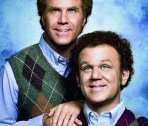
    3. Step Brothers (2008)
    4. The Other Guys (2010)

    All four of these films deal with men (in the loosest and most literal sense of the word) struggling desperately to maintain/restore/create pathetic and out-dated facades of masculine strength and power. All of them are eventually allowed to do so in the most savagely ironic way possible, with conclusions that deliberately obfuscate the narrative by granting these men the impossible. In other words, we laugh at the outrageous and disgraceful expectations that these male characters have of life and those around them, and then we laugh even harder as their expectations are met in an alternate comedic universe where the reprehensible are rewarded rather than punished.

    The result is that when men watch these films, they will more often than not find themselves secretly identifying with the brutish and laughable traits of these lost male souls. Whether it be the misogynistic sense of entitlement that the central characters of these films possess (the belief/fantasy shared by these characters that they are imbued with an innate primal masculinity and alpha-ness that should be respected and admired) or their tendencies to descend into infantile tantrums when this sense of entitlement is interfered with, men will inevitably find themselves seeing a magnified version of their own masculine identity. I can only presume that women see these films similarly, except that they are generally the witnesses rather than participants in these male role-plays.

    Although I could write a book on this topic alone, let’s take a single scene from each of these films as a brief example of the kind of thing I’m talking about.

    Anchorman: The Legend of Ron Burgundy (2004)

    The narrative is simple enough. Ron Burgundy (Will Ferrell) is a highly successful news anchor in the 1970s, whose all-male team of misogynistic newsmen consider it a personal affront when, for the first time in the history of the network, Veronica Corningstone, a female news presenter (Christina Applegate), joins the crew. A relationship is soon enough established between Ron and Veronica, and the narrative/comedy is driven by the tensions between their romantic involvement and their conflicting career aspirations.

    In this scene, Burgundy takes Corningstone out to a bar with a live band. It only takes a few minutes before Burgundy is invited to belt out a Jazz performance on his flute to an ecstatic crowd and an impressed Corningstone. The ultimate male fantasy (especially for those without musical talent) of casually delivering a virtuoso performance to an adoring crowd is parodied beautifully here.

    Talladega Nights: The Ballad of Ricky Bobby (2006)

    The rise and fall and rise of Ricky Bobby (Will Ferrell), a brilliant stock car racer whose hedonistic and obnoxious lifestyle is interrupted when a gay French Formula One driver, Jean Girard (Sacha Baron Cohen), ends his glorious run. Bobby drops out of the game, and his best friend (John C. Reilly) takes his family away from him. Of course, with the help of his deadbeat father (and fellow failed man), Bobby climbs to the top once more.

    This scene details the emasculating first encounter between Bobby and Girard. Bobby’s macho image is quickly shattered in the face of his feminine nemesis (only to be reclaimed later, of course).

    Step Brothers (2008)

    Two thirty-something males, Brendan (Will Ferrell) and Dale (John C. Reilly) have lived an infantile existence with their respective single parents… until now. When their parents get married, these two tragic individuals war it out with each other to see who will be the alpha man-child. Soon enough the two unite to fight a much larger threat, Brendan’s highly successful younger brother Derek (Adam Scott).

    In this scene, we see an early encounter between the newly united step-brothers and Derek. Brendan and Dale are hanging out in there official man-cave, the tree house, only to have Derek invade their space to mock them and brag of his own manly superiority, until the step-brothers strike back.

    The Other Guys (2010)

    Two failed/mediocre cops (Will Ferrell and Mark Wahlberg) have the opportunity to take on a big case when the two local alpha-male super cops (The Rock & Samuel L. Jackson) die in a freak accident.

    This scene actually features the death of the aforementioned super cops, itself a beautiful parody of the macho cop movie.

  • Lincoln (trailer)

    Lincoln (trailer)

    I’m not too sure about this one. The idea of seeing an Abraham Lincoln biopic is very appealing, but does it really have to be Spielberg? While Spielberg is a great director for entertaining blockbusters, I still have a bad taste from the very naff, Saving Private Ryan (DISCLAIMER: Yes, the first thirty minutes were fantastic, but the underlying all-American sentimentality prevents it from becoming a true classic).

    What about Schindler’s List you say? Sure, it was an incredible film that took on the formidable task of representing the holocaust with aplomb, but Lincoln is a film that demands incredible attention to historical detail (a requirement that Schindler’s List did not always meet). In my dreams, this film is directed by Clint Eastwood with a screenplay sourced directly from Gore Vidal’s Lincoln.

    My concern is that Spielberg will turn Lincoln into a morally perfect saviour figure, removing the ambiguities and complexities that defined the man. More importantly, I hope that Spielberg captures the intricacies of the American Civil War, and doesn’t simplify and skew it down to a slavery-ending myth.

    BUT – I’m still very excited to see what Spielberg does with it. One thing is for sure… it’s going to be big.

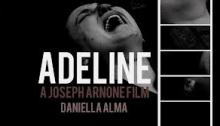
  • Adeline: A short film about demons

    Adeline: A short film about demons

    I recently came across this very effective short film from director, Joseph Arnone, and thought I’d share it with you. Adeline is a wonderfully concise portrayal of a poet’s emotional turmoil as she deals with her inner-demons.

    Effectively mixing elements of surrealism, melodrama and horror with an almost Victorian sense of emotional isolation, Arnone manages to capture the internal turmoil of his subject with incredible efficiency.

    Hats off to Daniella Alma for a pitch-perfect performance (her poetry was also the basis for the film), who I believe has collaborated on several projects with Mr Arnone. Recognition must also go to Max Blitzer and Christopher Arnone for a score that is inseparably interwoven into the content of the film. I hate to bring up the most overused word in film criticism, but the cinematography is gorgeous too.

    Adeline, a Riva Nova Films production, is an official selection of the 9th Annual Big Apple Festival in New York City, screening at the Tribeca cinemas in late 2012.

    Please check it out below – Joseph Arnone is somebody to look out for in the future.

  • Dirty Harry: The quiet apologies of Clint Eastwood

    Dirty Harry: The quiet apologies of Clint Eastwood

    Clint Eastwood has always been a paradoxical guy. Throughout his entire life he has presented himself as a bizarre point of convergence for seemingly contradictory liberal and conservative ideals. He is a man whose cinematic endeavours have oscillated between almost fascistic or misogynistic perspectives (High Plains Drifter, The Beguiled) and seemingly progressive views on the world (Breezy, Million Dollar Baby).

    There are many possible explanations for this. The first is that Clint Eastwood is a human being, and like all human beings he possesses a range of views that cannot necessarily be collated into a simple cohesive whole. The second is that Clint appears to have mellowed with age, and his views have subsequently changed – this certainly explains why critics find his recent films more palatable than those of his earlier years. These points are both true, to an extent.

    You might also argue that Clint doesn’t have authorial control over every film he is in, and therefore can’t be held entirely responsible for their varying perspectives on the world. But those who have looked into it will find that this is not the case. Almost every single film that Clint has been in since 1968 has been produced by his own company, Malpaso Productions. Clint is closely involved with the selection and production of every single film – even when he is not the director he is the auteur.

    In fact, on one occasion, when Clint Eastwood’s opinions differed strongly with that of the original director of The Outlaw Josey Wales (Philip Kaufman), he fired the director and immediately stepped into the role. Clint learnt early on that in situations where he chose not to fulfil the directorial role, he should make sure that the director understands exactly what is expected of them. We can therefore suppose that all films produced by Malpaso productions are Clint Eastwood controlled films… and almost all films that have involved Clint Eastwood after 1968 are produced by Malpaso productions.

    Clint Eastwood’s confusing status as a kind of hippy Republican is the result of having sat for decades between a rock and a hard place. While Clint has held conservative ideals his entire life, he has found himself fascinated with cultural niches that preclude him from totally embracing conservatism. Looking at his lifelong obsession with all things jazz and blues related; his regular use of meditation; his thorough (possibly excessive) enjoyment of the opposite sex; or the fact that he has spent a lifetime in the embrace of a left-leaning film industry, Clint has clearly been surrounded by a universe that contradicts many of the conservative ideals with which he aligns himself. The result: a range of films that often veer confusedly between thinly veiled (or possibly repressed) hyper-conservatism and a far more youthful and countercultural attitude that often seemed like an apologetic response to the former.

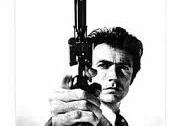
    This is particularly true in the case of the Dirty Harry series, which sees Clint play the role of a fascist cop in the original film, only to have the next three films apologise for the politics of the first… without succeeding. The fifth film seems to sit apart from this chain.

    NOTE: Don’t get me wrong, I love these films… that doesn’t mean I don’t think they’re backwards. They are.

    Dirty Harry (1971)

    I know what you’re thinking: “Did he fire six shots, or only five?” Well, to tell you the truth, in all this excitement, I’ve kinda lost track myself. But being this is a .44 Magnum, the most powerful handgun in the world, and would blow your head clean off, you’ve got to ask yourself one question: “Do I feel lucky?” Well do ya, punk?

    This Don Siegel directed classic introduces us to Harry Callahan, the original archetype for the cop who’ll do whatever it takes to get his man. Harry is prevented from bringing a serial-killing psychopath to justice because of bureaucracy, the state’s over-emphasis on protecting the guilty rather than the victim, and his tendency to over-interrogate his victims/suspects. As a result, Harry is forced to move even further beyond the boundaries of legal law-enforcement to bring things to a final solution.

    Criticised heavily for its perceived racism, justification of police brutality and for embracing the concept of brutal vigilante justice, Clint was surprised at the vitriol levelled against the film. He perceived it to be a sensible comment on the state’s over-emphasis on the rights of the criminal. He was openly unapologetic for the film.

    Despite the criticisms, the film went on to become incredibly successful and is retrospectively considered an essential part of the cinematic canon.

    Magnum Force (1973)

    I’m afraid you’ve misjudged me […] I hate the goddamn system, but until someone comes along with some changes that make sense I’ll stick with it.

    The second film in the Dirty Harry series is directed by Ted Post and boasts a screenplay by none other than John Milius and Michael Cimino. Magnum Force responds directly to the controversy that surrounded the first film (despite Clint nonchalantly rejecting any interest in these criticisms during interviews), with Harry now hunting down a group of vigilante cops who’ve taken the law into their own hands. At first, these cops mistakenly believe (just like the critics, Clint would say) Harry is like them, until he gives them the above quoted piece of his mind.

    Despite this head-on confrontation with the criticisms leveled at the original film, criticisms continued in relation to strong undertones of racism and sexism pervading the film. The decision to have Clint have a casual sexual relationship with a Japanese girl came off as a fairly deliberate attempt at plugging a hole to appease liberal sensibilities.

    The Enforcer (1976)

    She wants to play lumberjack, she’s going to have to learn to handle her end of the log.

    The third film, directed by James Fargo, sees Harry partnered with a woman to take down a terrorist group known as The People’s Revolutionary Strike Force. Harry’s new female partner, Kate Moore, comes custom built to combat the series’ negative image as sexist. Kate is portrayed as a desk-jockey unaccustomed to doing real police work – that way nobody can say the film is chauvinistic when Kate throws up during an autopsy while Harry chuckles to himself. Harry doesn’t mock her because she’s a woman, he mocks her because she’s weak… except we know why he really thinks she’s weak. This film ironically comes off as being more backwards in its gender politics than the first two.

    Sudden Impact (1983)

    Go ahead, make my day.

    This uber-creepy movie, directed by Clint himself, has Harry hunting down a killer who is picking off people in a small seaside community. Their crime – a gang rape many years earlier. Their killer – the woman they raped. Harry’s decision – let it go.

    So… um… I guess it’s progressive because the murderer is a woman? Or because rapists die? Or because a rape victim gets revenge? Or because Harry thinks rape is wrong? Nasty stuff.

    The Dead Pool (1988)

    Fuck with me, buddy, I’ll kick your ass so hard you’ll have to unbutton your collar to shit.

    The final film in the series, directed by Buddy Van Horn, involves a serial killer picking celebrities off one-by-one . The next person on the list – Harry Callahan. A fitting end to the series sees Harry delve into the world of celebrity with an appropriate amount of disgust. There is a wonderful note of bitterness in the film’s portrayal of an invasive media sticking their noses in where they’re not wanted. Perhaps Clint’s final response to criticisms of the series?